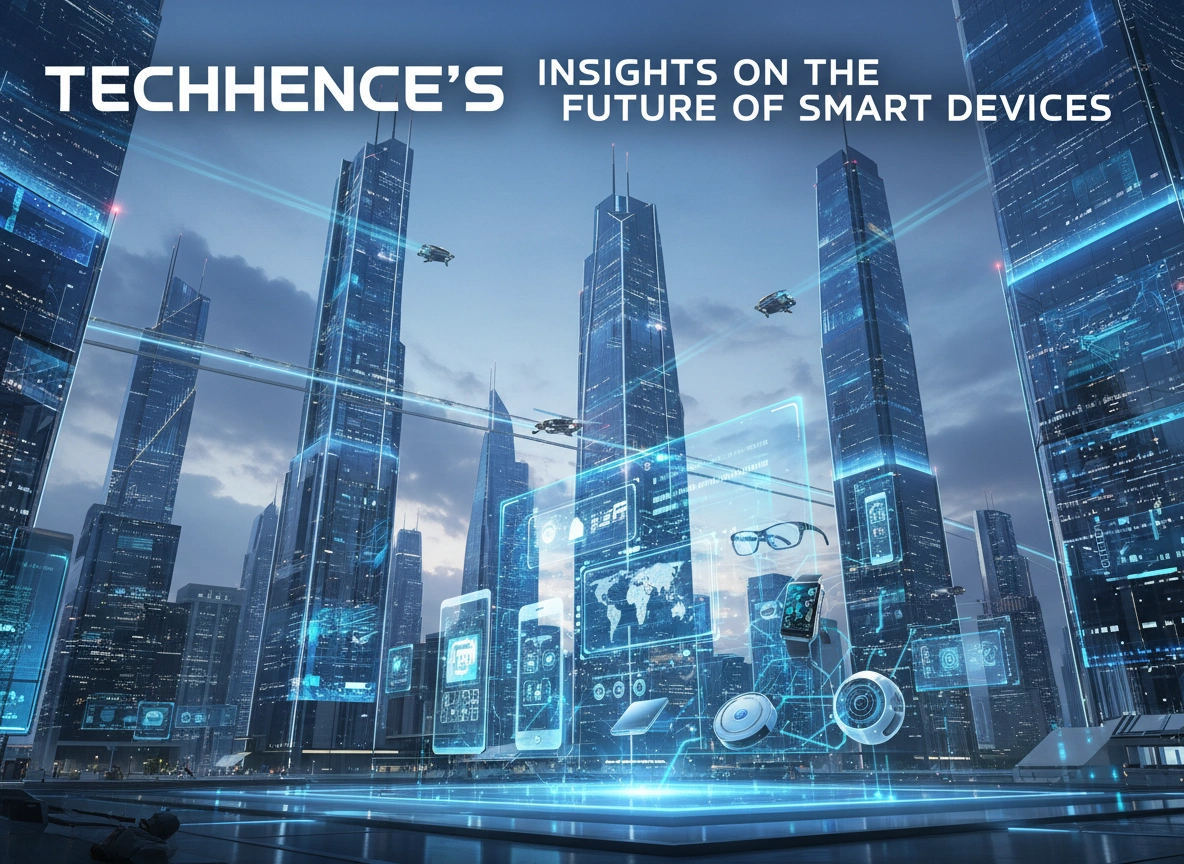
Technology rarely stands still. We see it move faster every year, transforming how we live, work, and interact with the world around us. At the center of this rapid evolution lies the smart device ecosystem—a network of gadgets that has grown from simple conveniences into essential components of modern infrastructure.
For industry observers and everyday users alike, understanding where this technology is heading is crucial. This article delves into the future of smart devices through the lens of Techhence, exploring current trends, bold predictions, and the profound impacts these innovations will have on key sectors of our society.
Who is Techhence?
Before we look forward, it is important to understand who is holding the telescope. Techhence has established itself as a leading voice in technology analysis and forecasting. Unlike generalist tech blogs that simply review the latest smartphone, Tech hence focuses on the underlying currents of technological change.
The organization specializes in bridging the gap between complex engineering breakthroughs and practical market applications. By analyzing data patterns, patent filings, and consumer behavior, Techhence provides a roadmap for what comes next. Their role isn’t just to report on technology but to contextualize it for businesses and consumers who need to prepare for a smarter, more connected future.
The Current Landscape: Where We Stand Today
To predict the future, we must first ground ourselves in the present. The current smart device market is defined by three major pillars: Artificial Intelligence (AI) integration, the Internet of Things (IoT), and the proliferation of wearable technology.
AI Integration is Everywhere
It is no longer enough for a device to be connected; it must be intelligent. We have moved past simple voice commands. Today’s smart speakers, thermostats, and security cameras use onboard AI to learn user habits. A thermostat doesn’t just hold a temperature; it learns your schedule, adjusts for local weather patterns, and optimizes energy usage without you lifting a finger. This shift from reactive to proactive assistance is the defining characteristic of modern smart tech.
The IoT Explosion
The Internet of Things has turned isolated gadgets into cohesive ecosystems. Your refrigerator can talk to your grocery list app; your car can communicate with your home security system. This interconnectivity creates a “mesh” of data that surrounds the user, aiming to make life seamless. However, the current state of IoT is often fragmented, with competing standards making true interoperability a challenge—a hurdle the industry is actively working to clear.
Wearables Going Mainstream
Wearable technology has graduated from niche fitness trackers to comprehensive health monitors. Smartwatches now detect irregular heart rhythms, measure blood oxygen levels, and even track stress. The success of these devices proves that consumers are willing to embrace technology that physically attaches to them, provided it offers tangible health and lifestyle benefits.
Techhence’s Predictions: The Next Generation of Smart Tech
Looking ahead, Techhence identifies several key trajectories that will define the next decade of smart devices. The future isn’t just about faster processors; it’s about smarter, greener, and more autonomous systems.
1. Ambient Computing and Invisible Tech
Techhence predicts a shift away from screen-heavy interactions toward “ambient computing.” In this future, technology fades into the background. Instead of pulling out a phone to issue a command, your environment will anticipate your needs. Smart sensors embedded in fabrics, furniture, and architecture will respond to gestures, voice, and even biometric indicators. The goal is technology that is omnipresent but not intrusive.
2. Radical Sustainability
The environmental cost of electronic waste is a growing concern. Techhence foresees a major pivot toward sustainable smart devices. We expect to see gadgets designed for a circular economy—modular phones that are easily repaired, biodegradable sensors, and devices powered by energy harvesting (using body heat or ambient light) rather than disposable batteries. Sustainability will shift from a marketing buzzword to a core engineering requirement.
3. Hyper-Connectivity via 6G
While 5G is still rolling out, the groundwork for 6G is already being laid. Techhence anticipates that this next leap in connectivity will eliminate latency entirely. This will allow smart devices to offload all processing to the cloud instantly, making the physical devices lighter, cheaper, and more energy-efficient. It will enable real-time holographic communication and sensory internet experiences that are currently impossible.
4. Emotionally Intelligent AI
Future smart devices will do more than understand your words; they will understand your tone and context. Techhence predicts the rise of “Affective Computing,” where AI can detect human emotions through voice analysis and facial micro-expressions. Your smart assistant might detect frustration in your voice and change its response style to be more concise or soothing, creating a more natural, human-like interaction.
Impact on Key Industries
The ripple effects of these advancements will extend far beyond consumer gadgets. Techhence highlights three sectors poised for radical transformation.
Healthcare: From Treatment to Prevention
The impact on healthcare will be revolutionary. We are moving toward the “Internet of Medical Things” (IoMT). Techhence envisions a future where smart implants and advanced wearables provide continuous, real-time monitoring of chronic conditions.
- Remote Patient Monitoring: Doctors will receive alerts before a patient realizes they are sick.
- Smart Hospitals: Beds and equipment will automatically track patient vitals and update electronic records, reducing human error.
- Elderly Care: Smart home sensors will allow seniors to live independently for longer, detecting falls or changes in routine that signal health decline.
Education: Personalized Learning Environments
In education, smart devices will dismantle the “one size fits all” model. Techhence suggests that AI-driven tablets and VR headsets will adapt to each student’s learning pace. If a student struggles with a math concept, the device will detect their hesitation and offer an alternative explanation or a visual aid. Classrooms will become immersive environments where history students can virtually walk through ancient Rome, making learning experiential rather than passive.
Entertainment: The Death of the Screen
Entertainment will become immersive. Techhence predicts that smart glasses and haptic suits will eventually replace traditional televisions for gaming and media consumption. We will see the rise of shared augmented reality (AR) experiences, where digital characters and game elements inhabit the physical living room, interacting with the furniture and the players in real-time.
Challenges and Opportunities in the Market
Despite the optimistic outlook, the road ahead is paved with significant hurdles. Techhence identifies a complex landscape of risk and reward.
The Privacy Paradox
The biggest challenge remains privacy. As devices become more integrated into our private lives—listening to our conversations and monitoring our health—the potential for data misuse grows.
- The Challenge: convincing consumers that their intimate data is safe from hackers and corporate surveillance.
- The Opportunity: Companies that prioritize “Privacy by Design” and transparent data policies will gain a massive competitive advantage. Trust will become as valuable a commodity as the technology itself.
Security Vulnerabilities
With billions of new devices coming online, the attack surface for cybercriminals expands exponentially. A poorly secured smart toaster could theoretically provide a backdoor into a secure home network.
- The Challenge: Creating universal security standards for cheap, mass-produced IoT devices.
- The Opportunity: There is a booming market for cybersecurity firms specializing in IoT protection and AI-driven threat detection that can safeguard smart homes and businesses.
The Digital Divide
There is a risk that these advanced technologies will only be available to the wealthy, deepening existing social inequalities.
- The Challenge: Ensuring that the benefits of smart healthcare and education are accessible to underserved communities.
- The Opportunity: Governments and non-profits can leverage scalable smart tech to deliver high-quality services to remote areas more cheaply than traditional infrastructure allows.
Conclusion: A Vision for Tomorrow
Techhence’s insights paint a picture of a future that is undeniably exciting but requires careful navigation. We are standing on the precipice of a new era where smart devices cease to be mere tools and become active partners in our lives.
For consumers, this means a life of greater convenience, personalized health insights, and immersive experiences. For businesses, it signals a need to innovate rapidly, prioritizing sustainability and user trust above all else.
The vision Techhence presents is not just about technology for technology’s sake. It is about harnessing these powerful tools to solve human problems. As we move forward, the most successful smart devices will be those that enhance our humanity rather than distract from it. The future is smart, connected, and, if navigated correctly, brighter than ever.
