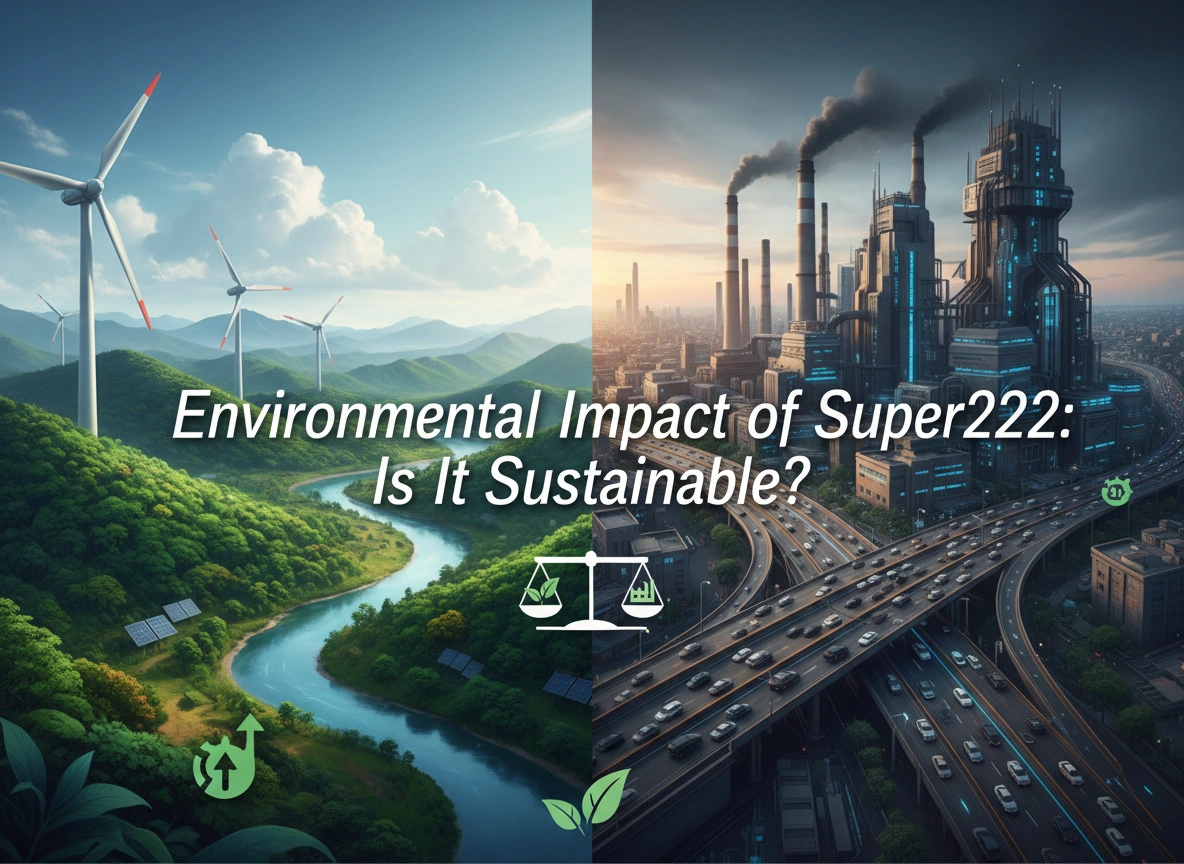
New materials and innovations constantly enter the market, promising better performance and higher efficiency. However, performance alone no longer dictates a product’s success. Consumers and industries now demand deep accountability regarding environmental footprints. One such innovation that has sparked significant discussion is Super222.
As adoption rates grow, questions about its ecological implications naturally arise. Does the manufacturing process rely on sustainable practices? How does the product perform during its operational life? What happens when it reaches the end of its lifecycle?
This article explores the complete environmental profile of Super222. We will examine its production, daily usage, and ultimate disposal. By the end of this guide, you will understand its core sustainability metrics and be able to make informed decisions about its implementation.
Understanding the Role of Super222
Before analyzing its ecological footprint, we must establish what super222 brings to the table. It serves as an advanced solution designed to optimize specific industrial and commercial processes. Promising high durability and enhanced performance, it targets sectors looking to upgrade their legacy systems.
However, any upgrade requires a careful cost-benefit analysis, especially concerning the environment. Evaluating sustainability means looking beyond immediate financial returns. We must use a cradle-to-grave approach, assessing every phase of the product’s existence.
The Production Phase: Resource Extraction and Energy
The beginning of any product’s lifecycle often carries the heaviest environmental burden. Manufacturing requires raw materials, massive amounts of energy, and complex logistics. How does the production of Super222 measure up?
Raw Material Sourcing
Creating high-performance solutions usually requires specialized raw materials. The extraction of these materials can disrupt local ecosystems if not managed correctly. Mining and harvesting operations often lead to soil degradation, water pollution, and habitat destruction.
Proponents argue that the supply chain for this product increasingly relies on responsibly sourced inputs. Many manufacturers now require strict environmental compliance from their vendors. By limiting the use of rare earth metals and prioritizing abundant or recycled materials, the initial ecological cost drops significantly. However, complete supply chain transparency remains an ongoing challenge across the entire industry.
Manufacturing Carbon Footprint
The actual fabrication process demands intense energy inputs. Factories must power heavy machinery, maintain specific climate conditions, and operate continuous assembly lines. If these facilities rely on fossil fuels, the carbon footprint of the final product expands dramatically.
Fortunately, modern manufacturing shifts toward renewable energy sources. Facilities producing advanced solutions increasingly utilize solar and wind power to offset their emissions. Furthermore, lean manufacturing techniques help minimize waste during assembly. While the production of Super222 still generates carbon emissions, the push toward green manufacturing slowly mitigates this initial impact.
Usage and Efficiency: Operational Benefits
A product might require significant energy to produce, but it can offset that debt through highly efficient operation. The usage phase often spans years or decades, making it a critical component of the sustainability equation.
Longevity and Durability
One of the strongest arguments for the sustainability of this product lies in its lifespan. Items that break quickly or require frequent replacement drive up manufacturing demands and create excess waste. Durability is a cornerstone of true environmental stewardship.
Super222 boasts an impressive operational life. Because it resists wear and tear effectively, users do not need to replace it as often as conventional alternatives. This extended lifecycle spreads the initial production carbon footprint over a much longer period. When a single unit does the work of three traditional units over a decade, the environmental savings become substantial.
Energy Consumption During Operation
Beyond simple durability, we must look at how much energy the product consumes while active. Inefficient systems drain local power grids and drive up greenhouse gas emissions.
Users report that upgrading to this solution often results in a noticeable drop in daily energy consumption. Optimized engineering allows it to perform its intended functions with less friction, lower heat generation, and fewer wasted resources. Over thousands of hours of operation, these small efficiency gains compound into massive energy savings. This operational efficiency serves as one of its strongest sustainability credentials.
End-of-Life and Disposal: The True Test
Every product eventually reaches the end of its functional life. How a material behaves once discarded often determines its ultimate environmental legacy. A highly efficient product loses its sustainable status if it languishes in a landfill for centuries.
Recyclability Challenges
The very features that make advanced materials durable often make them difficult to recycle. Complex chemical structures and mixed-material components resist standard breakdown procedures. When recycling facilities cannot separate the valuable base materials from the waste, the entire unit usually ends up in a landfill.
Currently, recycling Super222 presents specific logistical hurdles. Municipal recycling centers lack the specialized equipment required to process it safely and efficiently. Consequently, users must rely on specialized e-waste or industrial recycling programs, which are not universally accessible.
Waste Management Solutions
Recognizing this disposal bottleneck, forward-thinking manufacturers have begun implementing take-back programs. These initiatives allow users to return spent units directly to the producer. The manufacturer then breaks down the components in specialized facilities, harvesting reusable materials for the next generation of products.
While these programs represent a massive step forward, they require active user participation. If consumers choose the convenience of a dumpster over the effort of a mail-back program, the environmental benefits vanish. Improving disposal outcomes requires both better infrastructure and dedicated user education.
Weighing the Pros and Cons
To determine if this solution aligns with global sustainability goals, we must balance its distinct advantages against its ongoing challenges.
Environmental Benefits:
- Extended operational lifespan reduces the need for frequent replacements.
- High operational efficiency lowers daily energy consumption and grid strain.
- Growing manufacturer investments in green energy and lean production methods.
Environmental Drawbacks:
- Initial resource extraction still carries an unavoidable ecological cost.
- End-of-life disposal remains complex due to mixed-material construction.
- Reliance on voluntary take-back programs limits overall recycling rates.
Conclusion: Is Super222 Truly Sustainable?
Sustainability rarely exists as a simple yes or no question. Instead, it exists on a spectrum of continuous improvement. The environmental impact of Super222 reveals a product actively transitioning toward greener practices.
Its exceptional durability and low energy consumption during operation provide undeniable ecological benefits. By reducing resource strain over its active lifecycle, it outperforms many legacy alternatives. However, the industry must still address the complications surrounding its end-of-life disposal and raw material sourcing.
If you plan to implement this solution, you hold the power to maximize its sustainability. Audit your current operational needs to ensure it represents a necessary upgrade. Once implemented, maintain the equipment properly to extend its functional life as long as possible. Finally, commit to utilizing manufacturer take-back programs or specialized recycling centers when the product eventually retires. By taking these actionable steps, you can harness its performance benefits while minimizing its environmental footprint.
