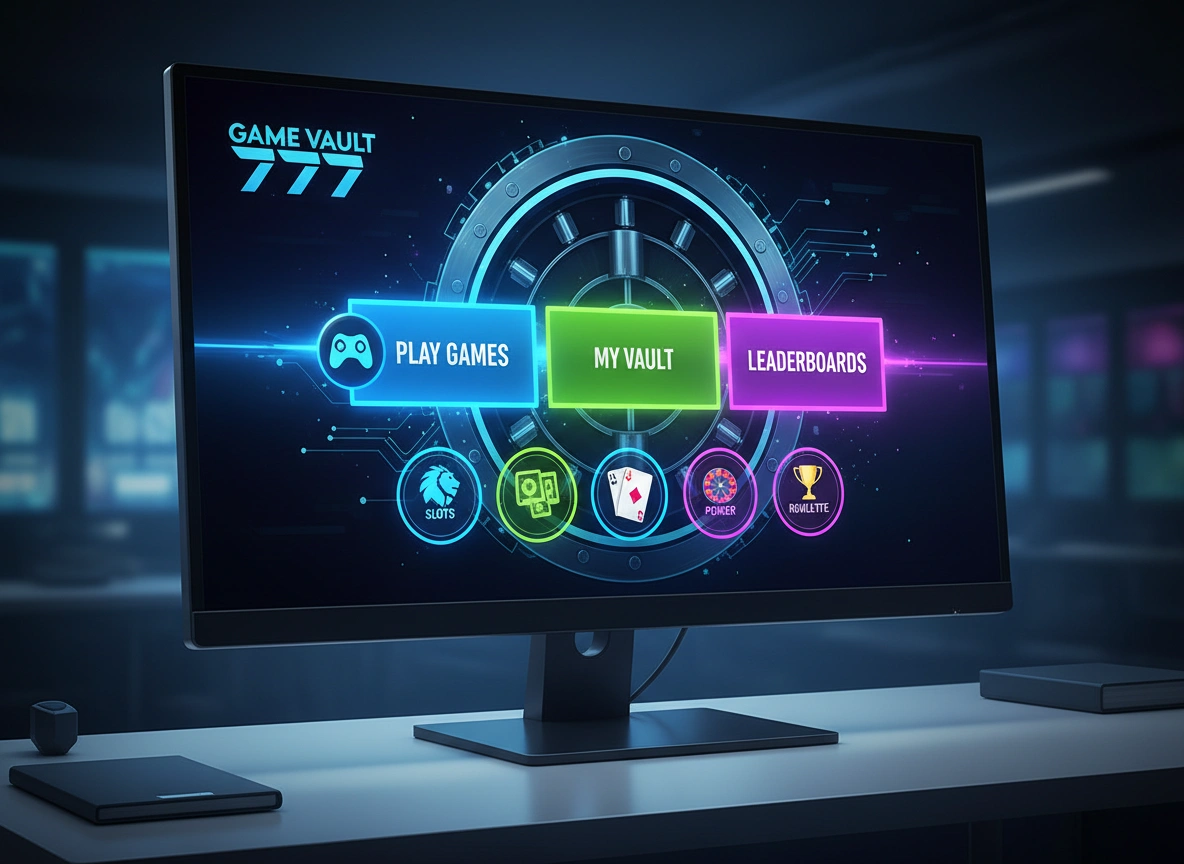
The online gaming industry is crowded. New platforms pop up daily, all vying for the attention of casual and hardcore gamers alike. While game selection and payout rates are critical, one factor often determines whether a player stays for five minutes or five years: the interface. Game Vault 777 has carved out a significant niche in this competitive landscape, not just because of its games, but because of a deliberate, user-centric approach to design.
This article examines the specific interface choices that make Game Vault 777 a standout example of usability. We will explore how its layout, navigation, and visual hierarchy work together to create a seamless experience that removes friction and keeps the focus where it belongs—on the gameplay.
The First Impression: Clean Layout and Visual Hierarchy
When a user first launches an application or website, they make subconscious judgments within milliseconds. Is this safe? Is it confusing? Do I know what to do next? Game Vault 777 addresses these immediate concerns through a clean, uncluttered aesthetic.
Prioritizing Visual Clarity
Many gaming platforms suffer from “feature bloat,” cramming every possible button, banner, and ticker onto the home screen. This leads to cognitive overload. Game Vault 777 takes a subtractive approach. The home screen presents only the most essential elements: the game lobby, account balance, and primary settings.
By using generous negative space (whitespace) around game icons and menu items, the interface allows the user’s eye to rest. This visual breathing room makes the colorful game thumbnails pop without overwhelming the viewer. The hierarchy is clear—promotions are visible but not intrusive, while the core action buttons are largest and most prominent.
Consistent Iconography
Language barriers can often hinder app usability, but universal iconography solves this. Game Vault 777 utilizes standard, recognizable icons for critical functions. A gear represents settings; a house represents the lobby; a stack of coins represents the cashier. This reliance on visual language means that even a first-time user can navigate the app intuitively without needing to read a tutorial. The consistency of these icons across different screens ensures that users never feel lost, regardless of how deep they are into the app structure.
Seamless Navigation: Reducing Click Depth
One of the cardinal sins of UI design is burying important features behind too many clicks. Game Vault 777 excels in keeping key functions accessible. This concept, often referred to as “low click depth,” ensures that players spend their time playing, not searching.
The “One-Tap” Philosophy
The platform appears to be designed around a “one-tap” philosophy for primary actions. Accessing the most popular games, checking your balance, or initiating a support chat usually requires a single interaction from the main dashboard.
For example, switching between game categories—slots, fish games, or table games—is handled via a persistent navigation bar or clearly defined tabs. This eliminates the need to back out to a root menu just to change genres. This fluidity keeps the momentum of the gaming session going, which is crucial for user retention.
Smart Search and Filtering
As game libraries grow, finding a specific title can become a chore. Game Vault 777 integrates a responsive search function that filters results in real-time. Beyond simple text search, the interface often includes smart categorization. Users can filter by “New,” “Popular,” or “High Volatility.” This categorization suggests that the designers understand player psychology; users don’t just look for names; they look for types of experiences.
Accessibility and Inclusivity in Design
A truly user-friendly interface must be usable by people with varying abilities. While gaming platforms often overlook accessibility, Game Vault 777 incorporates several features that make the platform more inclusive.
Readable Typography
Fancy, stylized fonts might look “gamified,” but they are often difficult to read, especially on smaller mobile screens. Game Vault 777 sticks to clean, sans-serif typefaces for instructional text and menu labels. The high contrast between the text and the background (often white text on dark blue or black backgrounds) ensures legibility for users with visual impairments or those playing in low-light environments.
Touch Target Sizing
On mobile interfaces, “fat finger” errors—tapping the wrong button because it’s too small or too close to another—are a major source of frustration. Game Vault 777 adheres to mobile design best practices by ensuring interactive elements meet minimum size requirements (typically 44×44 pixels or larger). Buttons have ample padding, reducing the likelihood of accidental clicks. This is particularly important in a real-money or high-stakes gaming environment where an accidental click could have financial consequences.
The Role of Micro-Interactions
Great design is often found in the details. Micro-interactions are subtle animations or design responses that acknowledge a user’s action. Game Vault 777 uses these effectively to provide system feedback.
Visual Feedback Loops
When a player taps a button, it might depress slightly or change shade. When a game loads, a progress bar clearly indicates wait time. When a win occurs, the balance counter ticks up rather than changing instantly. These small animations confirm to the user that the system has received their input and is processing it. Without these cues, users often wonder if the app has frozen, leading to frustration and rage-clicks.
Loading State Management
Nothing kills engagement faster than a frozen screen. Game Vault 777 handles data fetching gracefully. Instead of a blank screen while a heavy game loads, the interface displays skeleton screens or engaging loading animations. This perceives performance optimization—making the wait feel shorter than it actually is—keeps the user engaged during the inevitable technical pauses of online gaming.
User Engagement Through Dashboard Personalization
Modern UX goes beyond static screens; it involves adapting to the user. Game Vault 777 employs dynamic interface elements that personalize the experience based on player behavior.
“Recently Played” and “Favorites”
The interface remembers user preferences. A “Recently Played” section creates a shortcut to the games a user is currently enjoying, saving them the effort of searching for it again. Furthermore, the ability to “Favorite” specific games allows users to curate their own dashboard. This customization gives players a sense of ownership over the platform, transforming it from a generic app into their personal gaming vault.
Account Management Transparency
One of the most stressful parts of online gaming is managing funds. Obscure banking menus are a major trust-killer. Game Vault 777 tackles this by making the cashier interface transparent and linear. Deposit and withdrawal processes are broken down into step-by-step screens. The interface clearly displays transaction limits, processing times, and available methods. By demystifying the financial aspect of the platform, the UI fosters trust and allows players to feel secure.
Mobile Responsiveness: The Cross-Platform Challenge
In the current era, players expect to switch between tablets, smartphones, and desktops without losing functionality. Game Vault 777 utilizes a responsive design framework. This means the interface rearranges itself fluidly depending on the screen size.
On a desktop, the menu might be a sidebar; on a mobile device, it collapses into a hamburger menu or a bottom navigation bar. Crucially, the core experience remains the same. A player moving from a PC to an iPhone doesn’t have to relearn the interface. This consistency is vital for maintaining a loyal user base who plays across multiple contexts.
Conclusion: Setting the Benchmark
The success of a gaming platform is never solely about the games. It is about the vehicle that delivers those games. Game Vault 777 demonstrates that a user-friendly interface is not just a nice-to-have feature; it is a business imperative.
By focusing on clarity, reducing friction through intuitive navigation, ensuring accessibility, and providing immediate visual feedback, Game Vault 777 respects the user’s time and cognitive load. It removes the barriers between the player and the entertainment.
As the digital gaming market continues to saturate, the platforms that will survive are those that prioritize the user experience above all else. Game Vault 777 serves as a benchmark in this regard, proving that complex gaming systems can be presented with elegance and simplicity. For developers and designers in the gaming space, the Vault’s interface offers a blueprint on how to build a digital environment where players genuinely want to stay.
Please visit the official site for more info.